Loading...
Serving Inglewood, CA and surrounding areas. (424) 414-1965
Cracks and potholes grow fast in Southern California's sun and rain. We assess your surface honestly and fix what actually needs fixing - no overselling.
Asphalt repair in Inglewood means removing or treating damaged sections of a driveway or parking area and restoring them to a stable surface - depending on the damage, that might mean filling cracks, cutting out and repaving a section, or resurfacing the area, with most residential jobs wrapped up in a single day.
In Inglewood's climate, acting early almost always saves money. A small crack lets water in, water weakens the base, and what started as a simple fill becomes a full section replacement. Southern California's long dry season followed by concentrated winter rainfall makes this cycle happen faster here than in many parts of the country. If you are not sure whether your surface needs a patch or something more, an honest contractor will walk the driveway with you and tell you what they actually see - which is why we always come out for a look before quoting.
Once a repair is done, protecting it with a seal coat is the key follow-up step in this climate. For properties where widespread surface cracking has already set in, a full asphalt crack sealing treatment combined with repair may be the right approach before considering whether a full replacement makes more sense.
A web of cracks spreading across the driveway - named for its resemblance to alligator skin - signals that the damage is no longer isolated. In Inglewood, those cracks open wider every summer and let water in every rainy season. Once you see this pattern spread across a large area, repair is overdue.
A hole or depression means the material underneath has failed, not just the surface. Potholes tend to grow quickly once they form, especially after rain, and they can damage tires and create a tripping hazard. This is one of the clearest signs that repair is needed right away.
The edges of a driveway are the first place asphalt tends to fail, especially where the ground alongside shifts with moisture. If chunks are breaking off along the sides or the border looks ragged and uneven, that deterioration will work its way inward if it is not addressed.
Fresh asphalt is dark and slightly flexible. When it turns light gray and feels hard and gritty underfoot, the binder has oxidized - a direct result of Inglewood's intense year-round sun exposure. A surface in this condition is far more likely to crack under normal use and is overdue for repair and sealing.
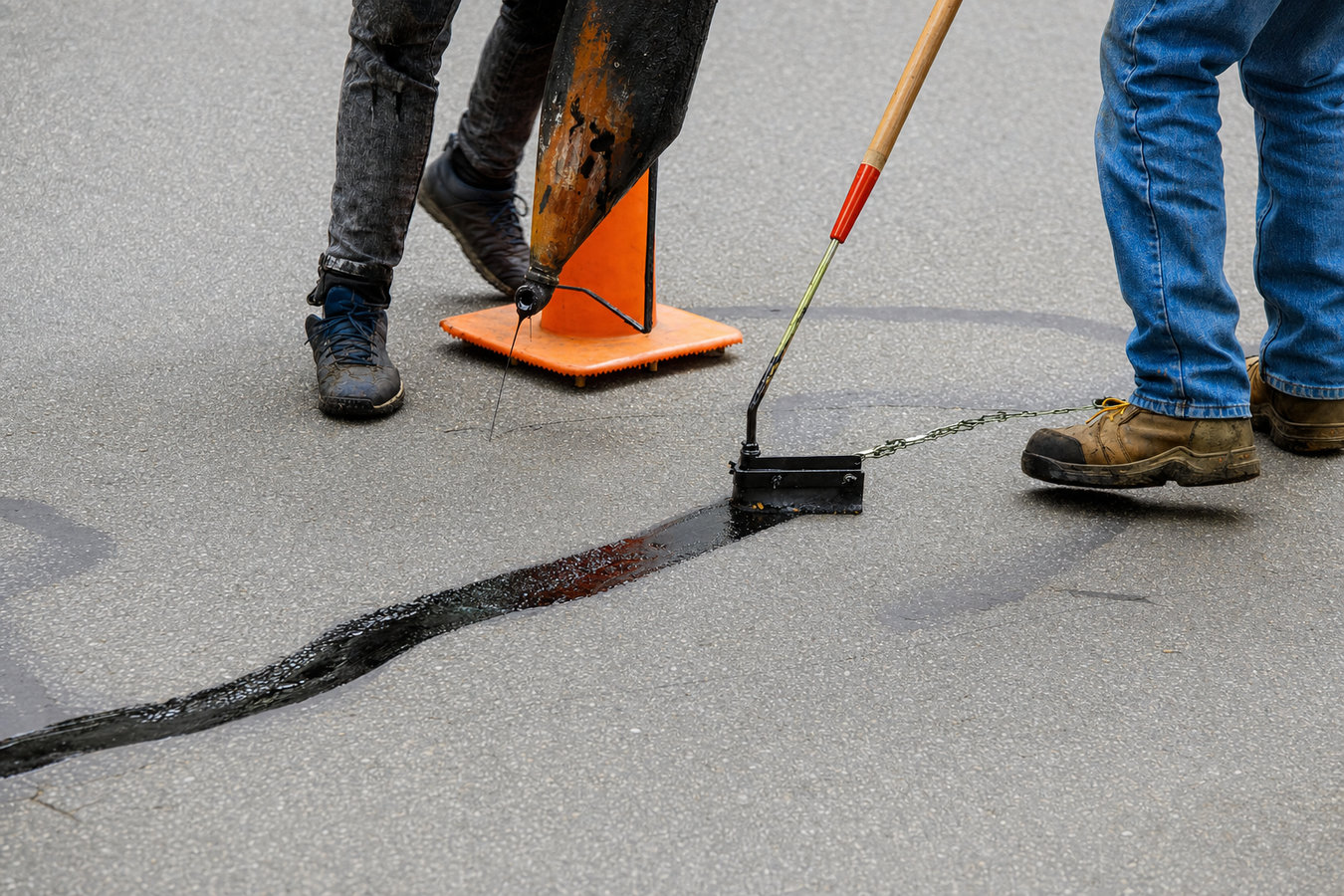
We handle the full range of asphalt repair needs - from sealing individual cracks before they spread, to cutting out and replacing failed sections, to patching potholes with properly compacted hot-mix material. Every repair starts with a clean edge cut so the new asphalt bonds tightly to the surrounding surface, rather than crumbling at the joint within a season. For cracks that run across a large portion of the driveway, we often recommend pairing the repair with a full asphalt crack sealing pass to address every opening at once.
For surfaces where potholes have formed, we remove the failed material down to the base, recompact as needed, and fill with hot mix - the same approach used for pothole repair on commercial lots. A cold-pour patch from a hardware store fills a hole temporarily; a properly cut and compacted repair holds for years. The right approach depends on the base condition beneath the damaged area, which is why every job starts with a surface walk, not a phone quote.
Best for surfaces with isolated cracks where the base underneath is still solid - prevents water intrusion and buys years of additional life.
Right for any location where the surface has collapsed into a hole or depression, creating a hazard and allowing water to pool and erode the base further.
Suited to areas where the base has failed in a defined zone - remove the bad material, recompact, and lay fresh asphalt for a result that matches the surrounding surface.
For driveways where the outer border is crumbling or pulling away, stopping edge deterioration before it works inward across the full surface width.
Inglewood gets hit from multiple directions at once. The intense year-round sun in the Los Angeles Basin oxidizes asphalt faster than in cooler or cloudier climates - drying out the binder, turning the surface gray, and making it brittle and crack-prone without regular sealing. The Newport-Inglewood Fault running through the area means even low-level seismic activity can open hairline cracks over time. And the expansive clay soils beneath much of the South Bay swell when wet and shrink when dry, pushing and pulling at the asphalt above them through every seasonal cycle. A repair that does not account for local soil behavior and UV exposure will not hold as long as one that does.
We do repair work regularly in Compton and Gardena and across central Inglewood, so we know what the soils, the sun, and the drainage patterns in this part of the South Bay do to asphalt over time. That local context shapes how we approach every repair - from how we prepare the base to what we recommend for follow-up maintenance.
Describe what you are seeing - cracks, potholes, uneven spots, or a worn surface - and we will schedule a visit. We reply within one business day and give you a written estimate at no charge.
A crew member walks the surface with you, checks the base condition and drainage, and explains what we recommend - whether that is crack filling, a section cut-out, or a full overlay. No upselling, just the repair the surface actually needs.
The crew cleans the damaged area, removes loose or failed material, and applies hot-mix asphalt compacted with a roller. Most residential repairs are complete in a single visit. Plan to keep vehicles off the repaired area for the rest of that day.
Your contractor gives you a specific curing window - typically one to two days for light use, longer in warm weather. After the surface has fully hardened, scheduling a seal coat is the single best step to protect the repair and extend the life of the whole driveway.
Free written estimate. Honest assessment of what the surface actually needs. We reply within one business day.
We walk the surface with you and tell you what we actually see - whether that is a small crack fill, a section replacement, or a recommendation that the whole driveway needs to go. We do not quote over the phone without looking at the job first.
The clay soils across the Los Angeles Basin move with moisture changes, and that movement is a primary reason driveways crack here even without heavy traffic. We account for local soil behavior when we prepare edges and compact the repair - not just patch the visible hole.
The Asphalt Institute sets the technical standards for asphalt materials and mix quality that separate a repair that holds from one that cracks at the edges within a season. We follow those standards on every job, not just the ones we think might be inspected.
You receive a written estimate before any work begins, and we hold a current California state contractor's license - verifiable through the state's online system. Never let repair work start without both of those in hand.
A repair done right the first time - with proper edge preparation, correct compaction, and a seal coat to follow - lasts far longer than a rushed patch job. That is the only kind of repair we do, because it is the only kind that holds up in this climate.
Seal individual cracks before water works into the base and turns a small fix into a big one.
Learn MoreRemove and replace failed asphalt sections so potholes stop growing and damaging tires.
Learn MoreCall today or request a free written estimate online - we reply within one business day and can often get a crew out quickly before conditions get worse.