Loading...
Serving Inglewood, CA and surrounding areas. (424) 414-1965
A cracked, faded driveway or parking surface does not always need a full tear-out. If the base is sound, a fresh asphalt overlay restores it in a single day at a fraction of the replacement cost.
Asphalt resurfacing in Inglewood means laying a fresh layer of hot-mix asphalt over an existing surface that still has a solid base - the old pavement stays in place, the new layer bonds on top, and most residential driveway jobs are complete in a single day.
It is not a repair for every situation. Resurfacing works when the foundation underneath is still structurally sound - no widespread base failure, no large sunken areas, no sections that flex when you walk on them. When those conditions are present, laying a new layer over a failing base simply delays the problem. A good contractor will tell you which situation you are in and explain why, rather than defaulting to the more expensive option.
For surfaces where existing cracks are widespread before resurfacing, pairing the job with a full pothole repair and crack treatment ensures the new layer has a clean base to bond to and will not reflect old damage through the fresh surface within a season or two.
Fresh asphalt is dark and slightly flexible. When it turns chalky gray and feels coarse or brittle underfoot, the binder has broken down from sun exposure - a very common condition in Inglewood's year-round sunshine. At that stage, the surface no longer protects the base underneath, and resurfacing now is far cheaper than waiting until the base fails.
A pattern of fine cracks resembling a dried riverbed is a sign the asphalt has aged past the point where sealing alone will help. In Inglewood, this pattern develops faster than homeowners expect because of the combination of UV exposure and the seasonal soil movement common in the LA Basin. Resurfacing covers that cracked layer with a fresh, bonded surface.
Standing water on a driveway means the surface has lost its shape from settling, soil movement, or worn-down high spots. In a climate where rain is infrequent but can be heavy, pooling water accelerates deterioration quickly. Resurfacing done with proper grading restores drainage and protects the base.
Curb appeal matters in Inglewood's active housing market, especially near SoFi Stadium and the Kia Forum where property reinvestment has been significant. If the driveway is the oldest-looking thing on the property, resurfacing is one of the fastest ways to bring the whole exterior up to the standard of the street - and it photographs well for listings or appraisals.
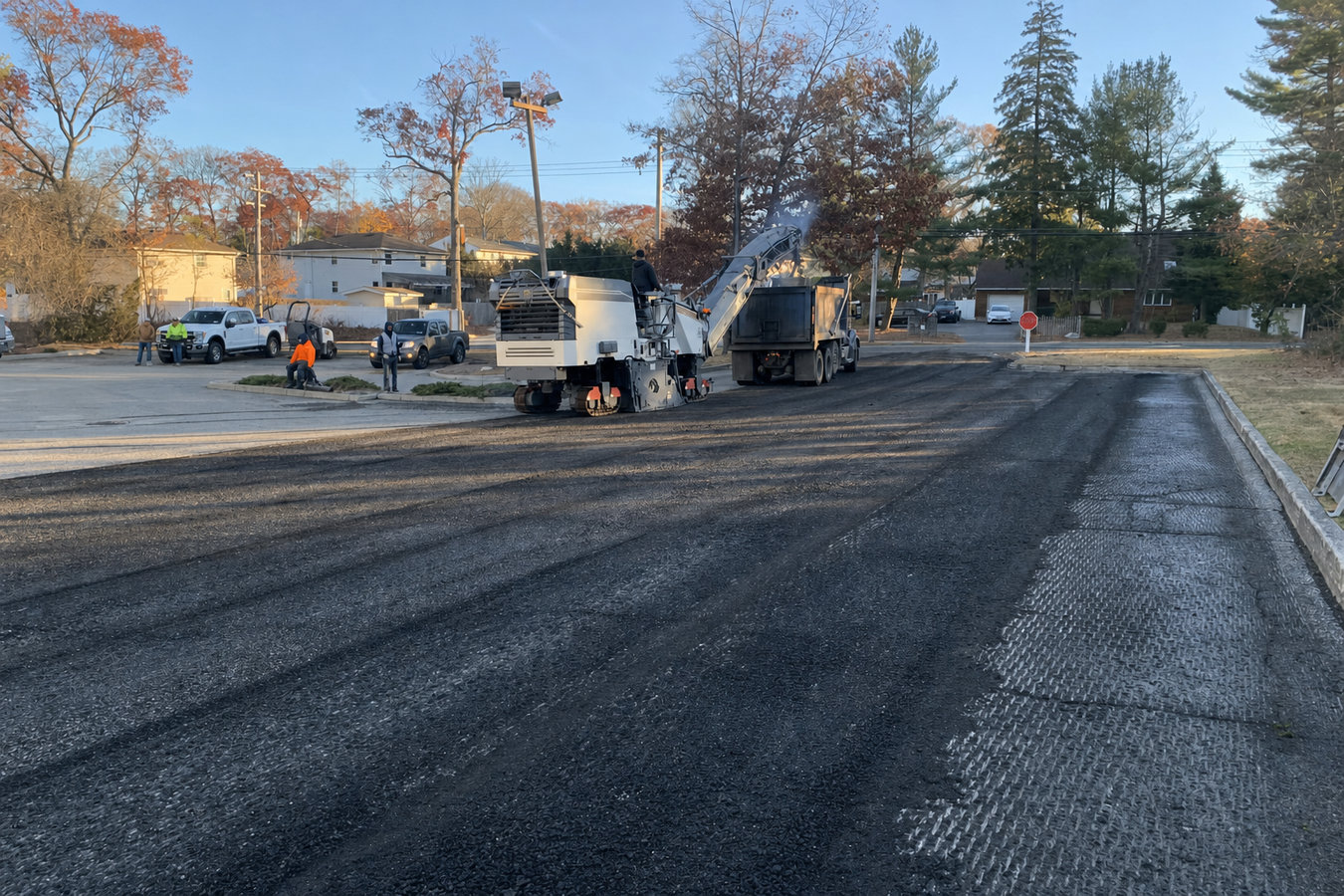
Every resurfacing job starts with a thorough surface assessment and prep phase - cleaning the area, addressing any cracks or low spots, checking that edges and transitions to sidewalks or garage floors will drain correctly. Then a tack coat is applied to bond the new layer to the existing surface. The hot-mix asphalt is spread and compacted with a roller to the specified thickness. For driveways where the surface is particularly uneven or built up from previous overlays, asphalt milling first grinds down the existing surface to create a flat, even base before the new layer is applied.
After curing - at least 90 days for the new asphalt to fully harden - we recommend a sealcoat application to protect the surface from Inglewood's intense UV exposure. Sealing every two to three years after that is the most effective way to extend the life of the resurfacing investment. We give every customer a maintenance schedule when the job is done so there is no guesswork about when to come back.
Best for homeowners with a sound base but a surface that has oxidized, cracked at the edges, or lost its shape - restores the look and function of the driveway in one day.
Suited to commercial or multi-unit property owners whose lot surface has deteriorated past what regular maintenance can address, but whose base is still structurally intact.
For surfaces with isolated failed sections - combine targeted pothole patching or section replacement with a full overlay so the new layer starts on a uniform, solid base.
When the existing surface is too thick or uneven for a direct overlay, milling removes the top layer first and creates a clean, consistent base for the new asphalt to bond to.
Inglewood driveways age faster than homeowners expect, and the main reason is the sun. The Los Angeles Basin gets intense year-round UV exposure - far more than most of the country - and that radiation is the single biggest driver of asphalt oxidation. UV breaks down the binder that holds asphalt together, turning surfaces gray and brittle over time. There is no winter freeze here to slow that process. On top of UV damage, the clay-heavy soils common throughout this part of Los Angeles expand when wet and contract when dry, pushing at the pavement from below through every seasonal cycle. The combination of UV damage and soil movement means a driveway that might last 15 to 20 years in the Midwest may need attention at the 8 to 12 year mark here.
We do resurfacing work regularly in Torrance and Redondo Beach as well as throughout Inglewood, so we have direct experience with how the local soil conditions and sun exposure affect different surfaces and what prep work each situation actually requires. That hands-on local knowledge shapes how we approach every job.
Describe your driveway - its approximate size and what you are seeing. We schedule a free on-site visit to measure, assess the existing surface condition, and confirm whether resurfacing is the right call or whether any sections need deeper repair first. You get a written quote that breaks down the work. We reply within one business day.
A crew member walks the driveway with you and points out any cracks, soft spots, or drainage issues that need to be addressed before the new layer goes down. This conversation determines whether the job will last - ask specifically what prep work is included and what the new layer thickness will be.
The crew cleans the surface, makes crack repairs or patching, and applies a tack coat - a thin bonding layer - before the hot mix goes down. The new asphalt is spread and compacted with a roller. For a standard residential driveway, this typically takes a single day. Plan to keep vehicles off the area and clear items stored near the edges.
You can usually walk on the new surface within a few hours. Wait at least 24 to 48 hours before driving on it, and avoid parking in the same spot for the first week or two while it fully firms up. After at least 90 days, applying a sealer is the single best step to protect the surface from Inglewood's intense UV exposure.
We will walk your driveway with you, tell you honestly what it needs, and give you a written quote - no obligation.
California requires paving contractors to hold a current state license, and you can look up any contractor through the California State License Board before signing anything. A legitimate contractor will give you their license number without hesitation and encourage you to look it up - that transparency is a baseline you should expect.
Some contractors default to recommending a full tear-out when resurfacing is all that is needed. We walk the driveway with you, check the base condition, and tell you which option your surface actually calls for - repair, overlay, or full replacement. You get the recommendation that is right for your situation, not the most expensive one available.
Every resurfacing job we do in Inglewood is planned with local UV exposure in mind - proper compaction thickness, a post-cure maintenance schedule, and a recommended sealing timeline. The National Asphalt Pavement Association guidelines we follow are calibrated for high-UV environments, not just national averages.
For a standard driveway, the crew arrives, preps the surface, lays the new asphalt, and compacts it to the proper thickness before leaving - all in a single visit. You are not waiting days for your driveway back. We give you a specific curing window so you know exactly when you can drive on it again.
A well-done resurfacing job restores both the function and the appearance of your driveway - smooth drainage, a clean dark surface, and a base that is protected against the seasonal demands of Inglewood's climate. Our goal is a result that holds up through the next decade, not just the next season.
Cut out failed sections and restore them with compacted hot mix before laying a resurfacing layer on top.
Learn MoreWhen the existing surface is too thick or uneven to overlay, milling grinds it down to create a flat base for the new layer.
Learn MoreBook now before the summer rush fills the calendar - our crew is scheduling jobs and your date goes fast.