Loading...
Serving Inglewood, CA and surrounding areas. (424) 414-1965
The right slope and a properly compacted base are what separate pavement that holds for fifteen years from pavement that cracks within three. We build it right from the ground up.
Grading and excavation in Inglewood means reshaping and digging out the ground before any paving material goes down - most residential driveway projects take one to two days for the base work, with paving following on the same day or the next, and the whole job usually wrapped up within a week depending on permit timelines.
Even the best asphalt fails early if the ground underneath is not prepared correctly. A properly graded and compacted base gives pavement something solid to rest on so it does not crack, sink, or collect standing water. Skipping or rushing this step is the single most common reason driveways in Inglewood fail within a few years. In a city built largely on clay-heavy soil that expands and contracts with every wet and dry cycle, base preparation is not a formality - it is what determines whether your investment holds up for a decade or starts showing problems in the first few seasons.
Grading and excavation is almost always the first phase of a larger paving project. If your driveway has reached the end of its life and needs full replacement, the base work comes first. After the base is ready, we hand off to asphalt paving for the finished surface.
If puddles sit on your driveway for hours after a rain, the surface was not graded correctly - or the ground has shifted since it was paved. In Inglewood's clay-heavy soils, settling is common, and standing water accelerates pavement breakdown. Proper regrading before repaving fixes the root cause.
Cracks that spread in a pattern across a large area - especially the alligator-style cracking common in the South Bay - usually signal that the base has moved or softened. Patching the surface will not help if the ground beneath is unstable; excavation and regrading are needed first.
If water pools near your foundation or runs toward your garage after rain, the slope of your driveway is working against you. This is a drainage problem grading can fix, and it is worth addressing before it causes serious foundation or structural damage.
When a driveway has reached the end of its life and needs full replacement, the old material comes out and the base must be inspected, repaired, and regraded before new asphalt goes down. Paving over a failed surface is a shortcut that leads to early failure.
We provide full-scope grading and excavation for residential driveways, private parking areas, and new paved surfaces across Inglewood and the surrounding South Bay. The work includes removing existing failed material, excavating to the required depth, shaping the subgrade to the correct slope, and compacting base material in layers before any asphalt goes down. Drainage direction is built into the grading - not added as an afterthought - so water moves away from your structure and toward the street or a designated drainage point. For properties where the drainage situation is complex, we coordinate with our drainage solutions work to make sure the finished surface functions correctly in heavy rain.
For projects that include concrete borders, curbs, or sidewalk connections, grading is coordinated with our concrete curbing and sidewalks work so the elevations match and transitions are clean. If your project is near the street and requires a city permit for work in the right-of-way or at the curb cut, we handle that process - a step that trips up many homeowners who hire contractors unfamiliar with Inglewood's requirements.
Right for driveways at the end of their life - remove everything down to native soil, regrade for correct drainage, build up a compacted base, and start fresh.
Best for adding a new paved surface on previously unpaved ground - excavate, grade, and compact so the new area has the same stable base as a professionally built driveway.
For properties where water drains toward the structure - reshape the surface slope so runoff moves where it belongs, protecting your foundation before the next rainy season.
When a surface is being resurfaced rather than fully replaced, targeted base repair in failed zones prevents the new overlay from cracking in the same spots as the old one.
Much of the Los Angeles Basin, including Inglewood and the surrounding South Bay, sits on soils with a significant clay content. Clay soils expand when wet and shrink when dry, which means the ground underneath your driveway is constantly moving with the seasons. Grading and excavation work here must account for that movement - the base needs to be deep enough and stable enough to resist shifting, or your pavement will crack and heave regardless of how good the asphalt is. Southern California's Mediterranean climate also means most of the rain falls in a compressed window from November through March, and the best time to schedule base work is during the long dry season when the soil is workable and will not be disturbed before the base can compact and set.
Inglewood also has a large number of homes built between the 1940s and 1970s, and excavation on these properties regularly uncovers buried irrigation lines, old concrete slabs, or tree root systems. We communicate immediately if something unexpected comes up and walk you through the options before proceeding. We work regularly in Compton and Lawndale and across the South Bay, so we have seen what the soil conditions look like on older lots throughout this part of Los Angeles County and know how to handle what comes up.
We schedule a time to walk the site in person - we need to see the slope, the soil, the access points, and the existing surface before giving you a meaningful number. Be cautious of any contractor who quotes without visiting the property.
If your project involves work near the street, curb cut, or public sidewalk area, we handle the permit application with the city. This typically adds a week or two to the start date - we keep you informed so the timeline is never a surprise.
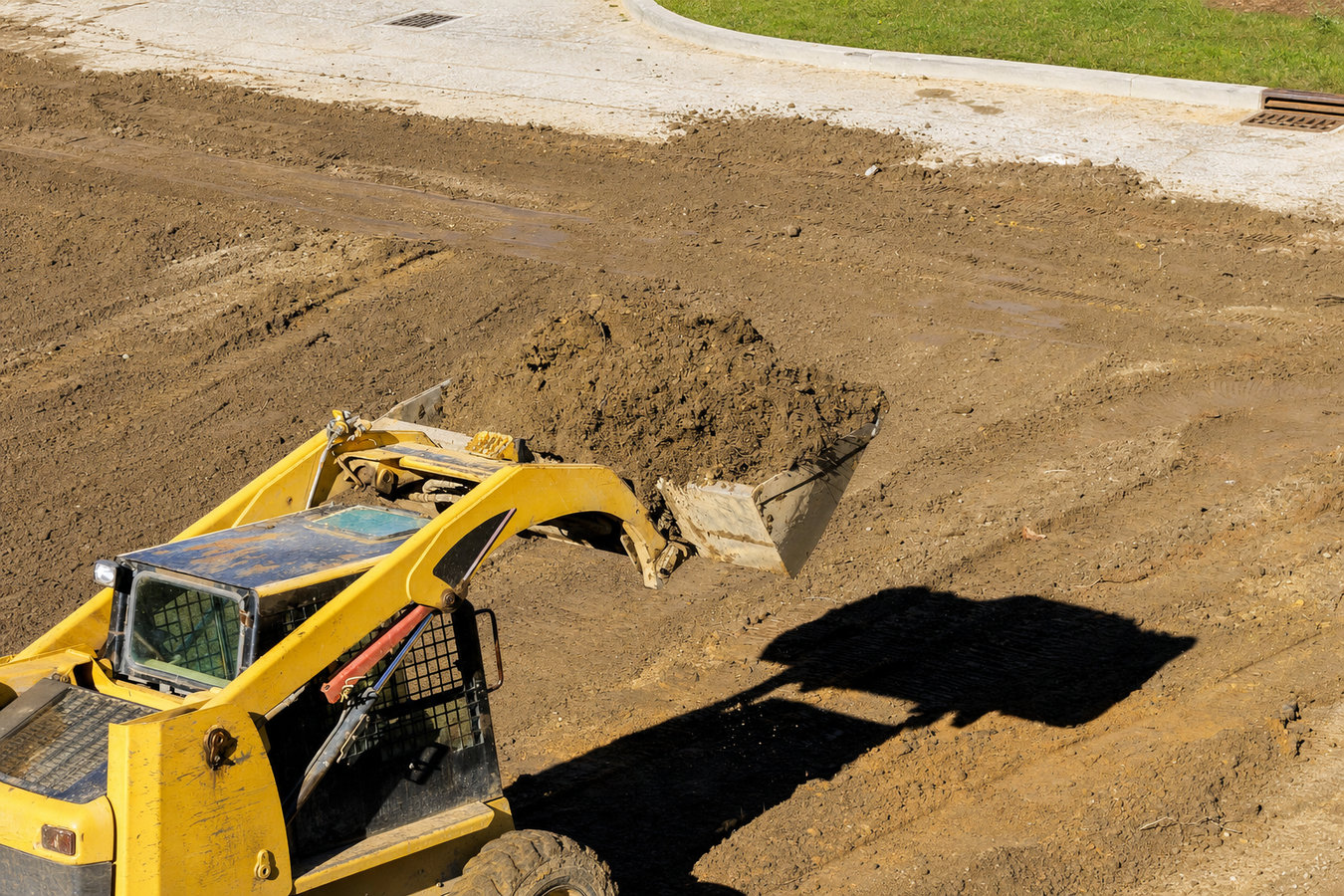
The crew brings in equipment to remove the existing surface material and dig to the required depth. Excavated material is loaded and hauled away. This is the noisiest phase - plan for restricted driveway access while it is underway.
Once excavated, the crew shapes the subgrade to the correct slope and compacts in layers. We walk the finished base with you before paving begins so you can confirm drainage is directed correctly and approve the work before asphalt goes down.
We come out to walk the site, assess the soil, and give you a written proposal - no charge and no pressure to move forward until you are ready.
Clay-heavy soils throughout the Los Angeles Basin require a deeper, more carefully compacted base than in most other regions. We account for soil behavior in every grading job - not just on the lots where the client already knows it is a problem.
We slope every surface so runoff moves toward the street or a designated drainage point. Inglewood is a dense urban city with limited natural drainage - getting the grade right keeps water away from your foundation and keeps your property compliant with local stormwater requirements.
Homes from Inglewood's mid-century development era regularly have buried surprises under the driveway. We communicate immediately if something unexpected appears and discuss how it affects scope and cost before doing anything that changes the job.
Our California contractor license is verifiable online through the National Asphalt Pavement Association maintains industry standards we follow, and we are familiar with Inglewood right-of-way permit requirements so your project does not stall on paperwork.
Proper grading and excavation is unglamorous work - you cannot see it once the asphalt goes down - but it is what everything else rests on. We do it right the first time so the finished surface performs the way it should for the long term.
After grading, concrete borders and sidewalk work ties the finished lot together and keeps edges stable long-term.
Learn MorePair grading with proper drainage infrastructure so water moves off your property the way it is supposed to after every rain.
Learn MoreThe dry season is the best window for base work - call now and we will visit your property, assess the soil and drainage, and give you a clear written proposal before the rains arrive.